“They should.”
“They should. They won’t.”
“What do I tell them?”
“The truth before someone cruel explains it for you.”
So Richard began learning history he had never been taught.
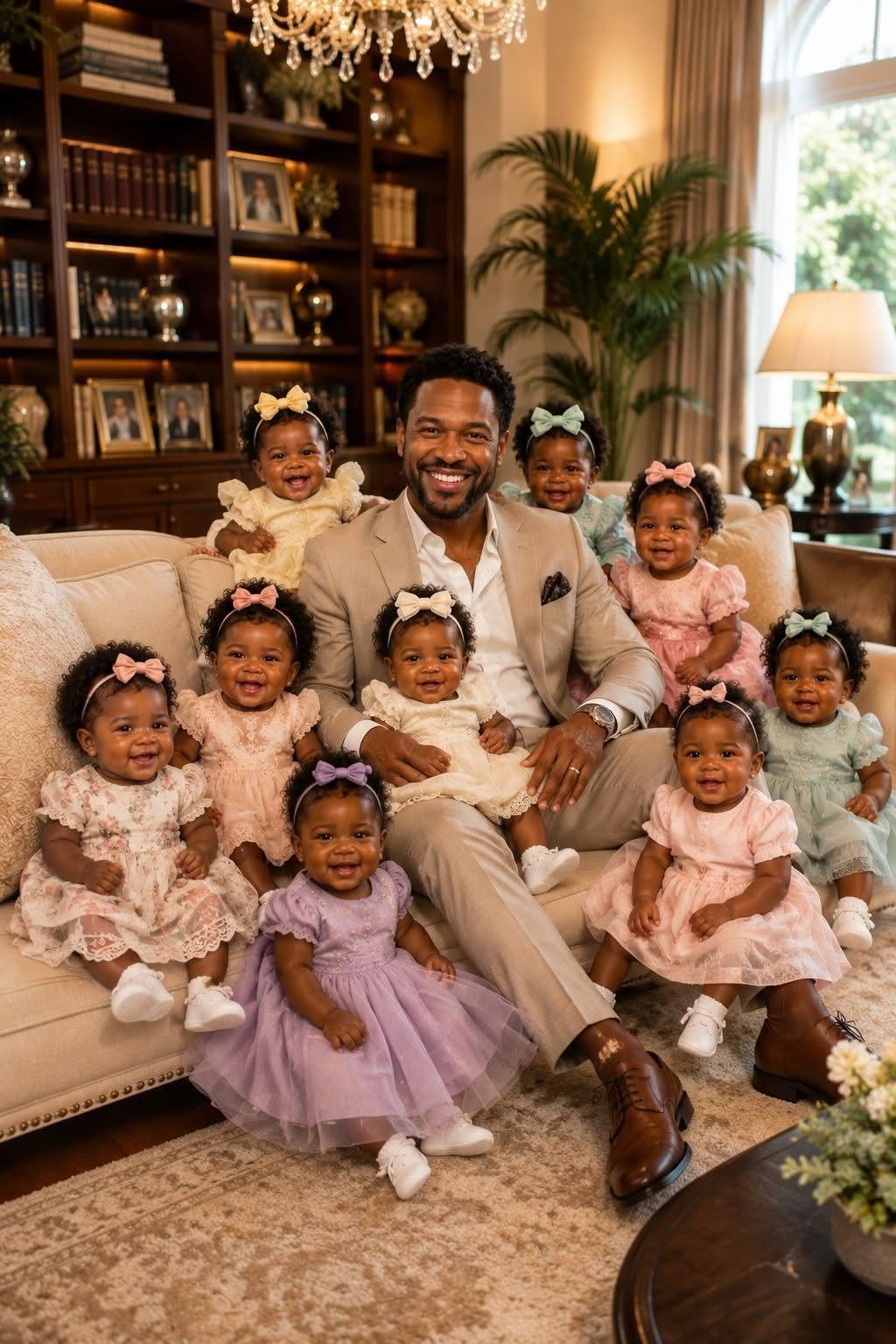
He brought home books about Black families, scientists, writers, soldiers, artists, and activists. He found dolls that looked like his daughters. He drove two counties away to a barber and beauty supply store recommended by Esther.
He also learned to say, “I don’t know.”
Those words saved his daughters from many of his mistakes.
When Holly asked why no one in their family photographs looked like her, Richard did not say color did not matter.
He said, “It matters because the world sometimes makes it matter unfairly. It does not make you less mine.”
When Jasmine asked whether their birth mother loved them, Richard did not invent a comforting answer.
He said, “I don’t know why she left. I believe leaving nine babies together may have been the only way she knew to keep you found.”
The first year ended with another court hearing.