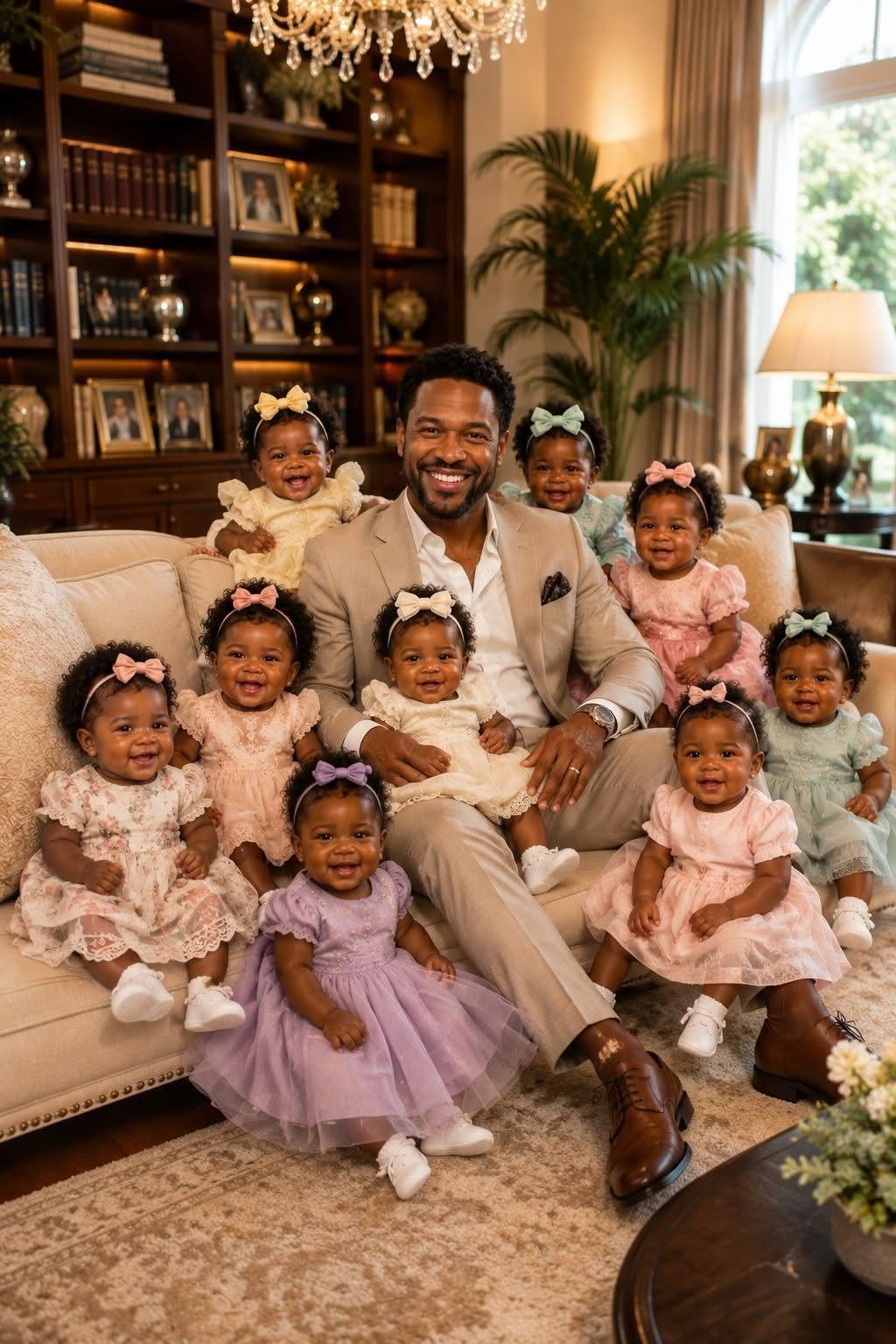
“That is not what I said.”
She returned on Sunday with combs, oils, ribbons, and three women from her church.
They taught Richard how to care for the girls’ skin and hair without treating either as a problem to be solved.
“Do not cut it all off because it is easier for you,” Esther warned.
“I wouldn’t.”
“Good intentions become excuses when a person is tired.”
Richard wrote that sentence in his notebook.
Esther became Aunt Esther.
Samuel became Uncle Sam.
The women from church organized meal schedules. A barber built shelves. A carpenter donated wood for bunk beds the girls would need later. Factory workers gave Richard unused vacation days. The diner owner allowed him to wash dishes after closing in exchange for extra food.
The same town that judged him began keeping him alive.
Not everyone changed.
A grocery clerk once refused to serve Richard while he held Daisy in one arm and pushed a cart containing three sisters.
A doctor asked whether he ran a charitable institution.
A woman at church suggested the girls sit in a separate pew because they were “too distracting.”
Richard learned that love could not protect children from racism by pretending racism did not exist.
At first, he made that mistake.
When Rose came home from kindergarten crying because another child said Richard could not be her real father, he answered, “Families come in all forms.”
Rose asked, “But why did she say my skin is dirty?”
Richard had no prepared response.
He told her the child was wrong.
That was true.
It was not enough.
Esther sat with him that evening.