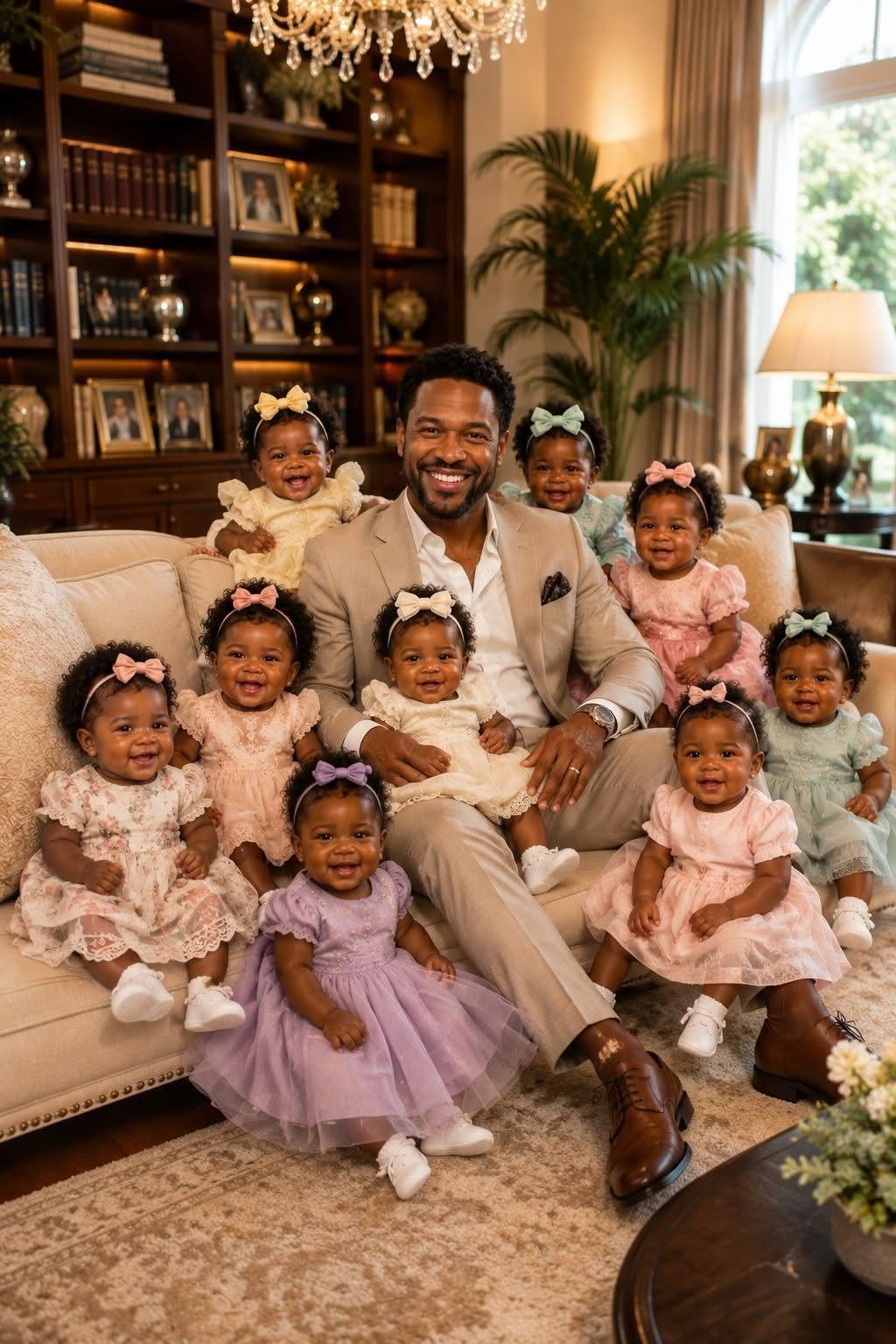
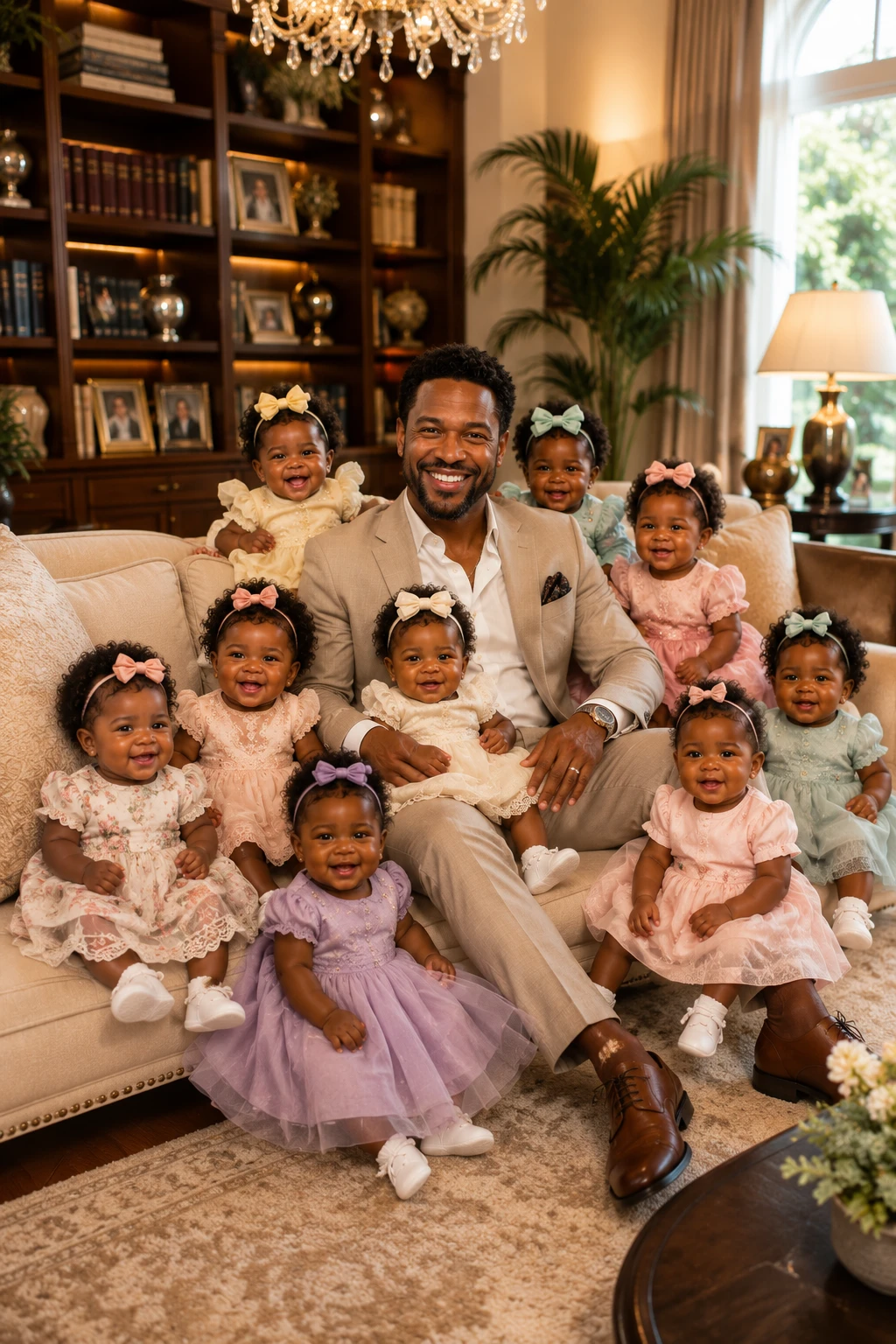
The social worker reported that all nine children were healthy, bonded, and developing normally. Richard’s finances remained strained. His support network had improved. The house was crowded but safe.
The county attorney still recommended placing the girls in three separate adoptive homes.
“Three families have already been approved,” she said. “Each can provide greater financial stability.”
Richard’s face remained still.
The judge asked whether the proposed families would maintain sibling contact.
“They have expressed willingness.”
“Willingness is not obligation,” Richard said.
The attorney objected.
The judge allowed him to continue.
“People promise visits before separation,” Richard said. “Then someone moves. Someone becomes busy. Someone decides one child reacts badly. Ten years later, sisters become photographs.”
One of the proposed adoptive mothers began crying.
Richard looked toward her.
“I do not believe you are bad people. I believe nine children should not lose one another because I am poor.”
The court approved the adoption.
All nine.
The town newspaper printed the headline:
LOCAL WIDOWER ADOPTS NINE ABANDONED INFANTS
Someone wrote beneath a copy posted outside the pharmacy:
FOOL.
Samuel crossed it out and wrote:
FATHER.
PART FOUR — NINE GIRLS, NINE FIRES
The girls did not grow into one shared personality.