Lily refused.
Iris wanted historical verification before contact.
Violet said biology changed nothing.
Daisy wanted medical information.
Jasmine wanted to expose the maternity residence publicly.
Heather worried about lawsuits.
Holly wanted to know whether any birth mother had searched for them.
Anne locked herself in Richard’s old workshop and cried.
Richard felt the family shifting beneath him.
For twenty years, the story had been simple.
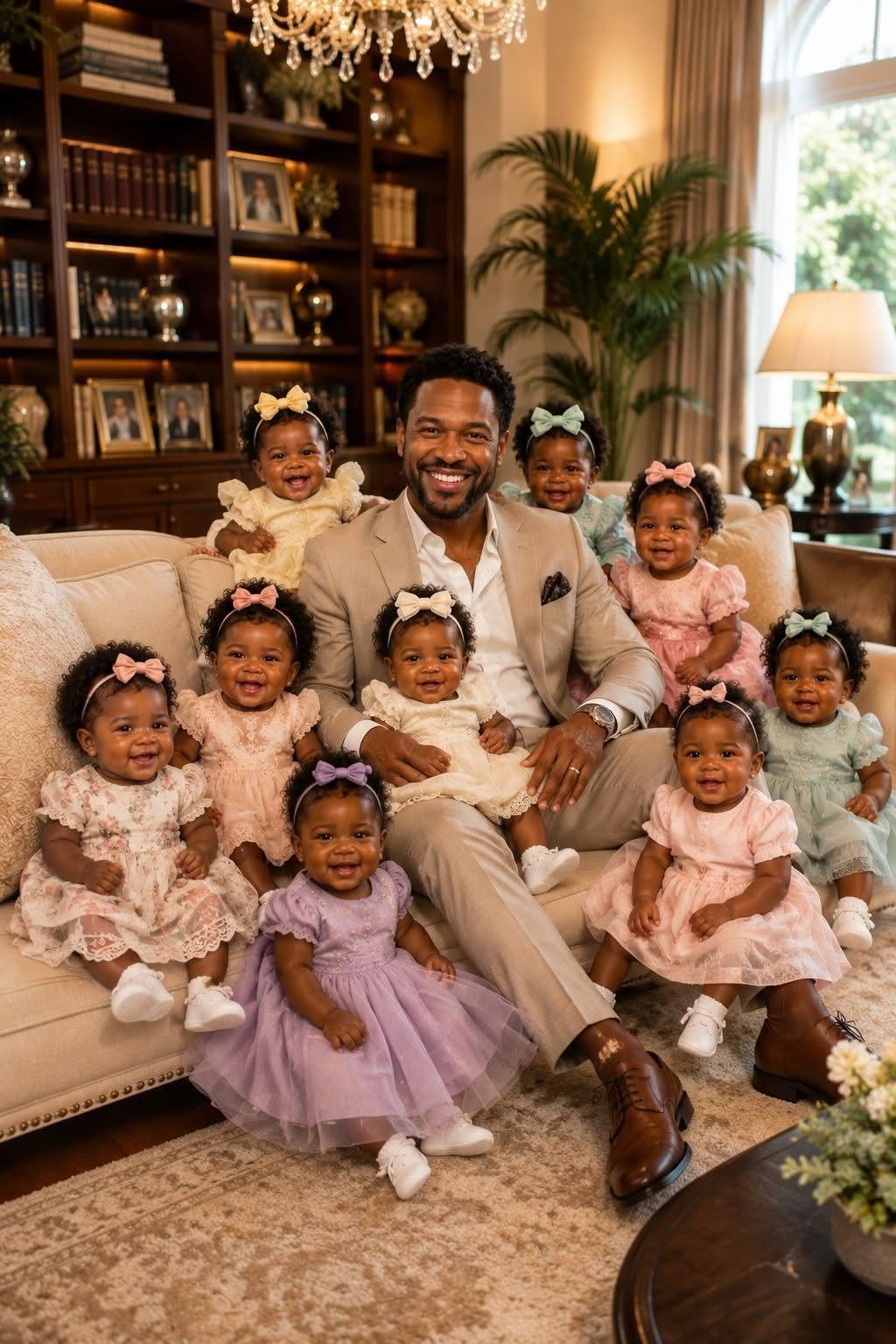
Nine babies found together.
One father kept them together.
Now truth introduced nine separate beginnings.
He wanted to destroy the box.
That frightened him.
Love was becoming control.
Exactly as it did whenever adults feared information might alter a family.
He placed the records on the table.
“These belong to you.”
Rose looked at him.
“You’re not going to decide?”
“No.”
“What if finding them changes things?”
“It will.”
“What if someone wants to leave?”
“You have already left and returned many times.”
“That isn’t what I mean.”
Richard understood.
“What if a birth family becomes more important?”
Rose did not answer.
Richard’s chest hurt.
Then he remembered Lily at fourteen.
We didn’t ask you to take us.
“You do not owe me ignorance,” he said.
PART SEVEN — NINE MOTHERS
The search took three years.
Not every file produced a reunion.
Rose’s birth mother, Bernice Coleman, had been sixteen when a married employer assaulted her. Her parents sent her to the maternity residence and told relatives she was visiting cousins. She was informed her daughter died shortly after birth.
When Rose called, Bernice did not believe her.
Then Rose described the scar listed on the infant record.
Bernice began sobbing.
Their first meeting lasted six hours.
Richard sat in the car outside because Rose asked him to come but not enter until invited.
Afterward, Bernice hugged him.
“You raised my baby.”
Richard answered, “She raised me too.”
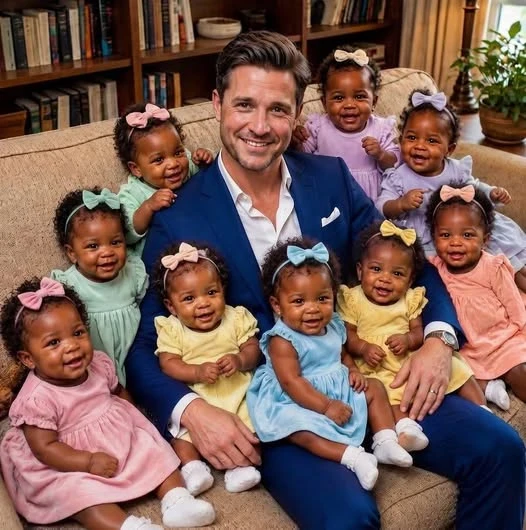
Lily’s mother had died.
Her records led to two half-brothers who welcomed her immediately and a half-sister who accused her of trying to claim inheritance.
Iris’s mother refused contact.
The letter said:
I survived by believing the past was closed. Please do not open it.
Iris honored the boundary.
She cried anyway.
Violet’s mother, Camille, had searched for decades. She attended music performances believing every young Black singer might be her daughter.
Their reunion became public because Violet was already performing professionally.
Newspapers called it a miracle.
Violet disliked the word.
“The miracle would have been telling her I was alive in 1979.”
Daisy discovered her father was a state legislator who had paid the maternity residence to conceal a relationship with a household employee. He denied paternity until DNA testing proved it.
Jasmine published an investigation exposing the residence’s network. Several adoptive families learned their children had been sold through illegal arrangements. Lawsuits followed.
Heather’s mother lived only forty miles from Richard’s house.
She had passed him in grocery stores without knowing her daughter stood nearby.
Holly’s birth mother wanted contact but struggled with addiction. Their relationship moved through hope, relapse, anger, and cautious boundaries.
Anne’s mother was Evelyn Carter.